
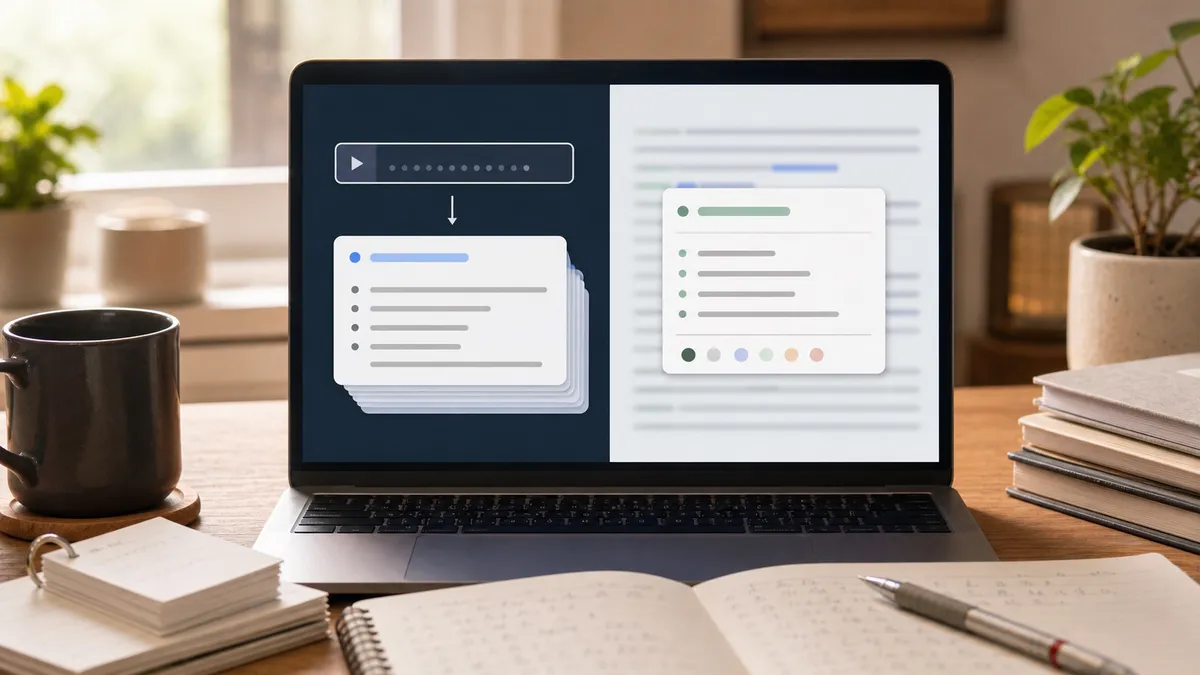
If you are searching for a Yomitan alternative, the real question is probably not whether Yomitan is good. It is excellent. The question is whether a pop-up dictionary is enough for your Japanese Netflix routine.
Yomitan answers a word-level question: what does this word mean, how is it read, and can I send it to Anki? KIKUGO answers a different question: what is this whole subtitle line doing, and can I save the sentence without leaving the episode?
For the direct feature comparison, start with KIKUGO vs Yomitan. This page is for learners who already know Yomitan exists and want to know when a Netflix-specific tool makes more sense.
Short answer
| Need | Better fit |
|---|---|
| Fast word lookups across websites | Yomitan |
| Pitch accent and dictionary depth | Yomitan |
| Full-sentence Netflix explanations | KIKUGO |
| Minimal setup before watching | KIKUGO |
| Sentence cards from real subtitles | KIKUGO |
Yomitan is hard to beat if you are reading articles, visual novels, web pages, or manga text in the browser. KIKUGO is the stronger Yomitan alternative when your bottleneck is Netflix dialogue, not dictionary lookup.
Where Yomitan is still the best choice
Use Yomitan when you want control. It is free, fast, and works almost anywhere selectable text exists. With good dictionaries installed, it can show readings, definitions, pitch accent data, example sentences, audio, and Anki fields.
That makes it ideal for reading practice. If you are working through news, blogs, novels, or grammar examples, Yomitan stays out of the way and gives you the exact word-level information you asked for.
The trade-off is that it expects you to know what to look up. Japanese subtitles often fail in a different way: the words may be familiar, but the sentence still feels slippery because of omission, particles, contractions, register, or scene context.
Where KIKUGO fits better
KIKUGO is built for one flow: open Netflix with Japanese subtitles, click a line, understand it, and save it if it is worth reviewing.
That matters because subtitles are not dictionary entries. A line can be easy word by word and still confusing as a sentence. KIKUGO focuses on the full line: meaning, grammar, nuance, reading support, and the kind of note you can review later.
If your goal is Netflix to Anki sentence mining, KIKUGO removes the steps that usually kill the habit: copying text, switching tabs, choosing fields, formatting a card, and deciding what explanation to write.
Setup and learning curve
Yomitan has a light install, but a serious setup usually includes dictionaries, AnkiConnect, note fields, templates, and personal preferences. That setup is worthwhile if you want a long-term dictionary stack.
KIKUGO is narrower. Install it, open Netflix, and click a Japanese subtitle. The trade-off is platform scope: KIKUGO is not trying to replace your browser-wide dictionary. It is trying to make one high-value routine repeatable.
For a broader view of the tool landscape, read Best Netflix Extension to Learn Japanese.
Which should you choose?
Choose Yomitan if your main study material is text and you enjoy maintaining a precise dictionary-plus-Anki setup.
Choose KIKUGO if your main study material is Japanese Netflix and the slow part is turning useful subtitle lines into explained, reviewable cards.
The strongest setup for many learners is both: Yomitan for reading, KIKUGO for Netflix. Install KIKUGO, mine five lines from one episode, and compare the cards you actually save against your current workflow.
FAQ
What is the best Yomitan alternative for Netflix Japanese? KIKUGO is the better fit if your main goal is explaining full Netflix subtitle lines and saving them as Anki-ready cards. Yomitan is still excellent for fast word lookups while reading.
Should I replace Yomitan with KIKUGO? Not necessarily. Many learners use Yomitan for word-level dictionary lookups and KIKUGO for sentence-level Netflix mining.
Does KIKUGO need dictionary imports? No. KIKUGO is built around click-to-explain subtitle lines, so it does not require importing Japanese dictionaries or configuring AnkiConnect before you start.