
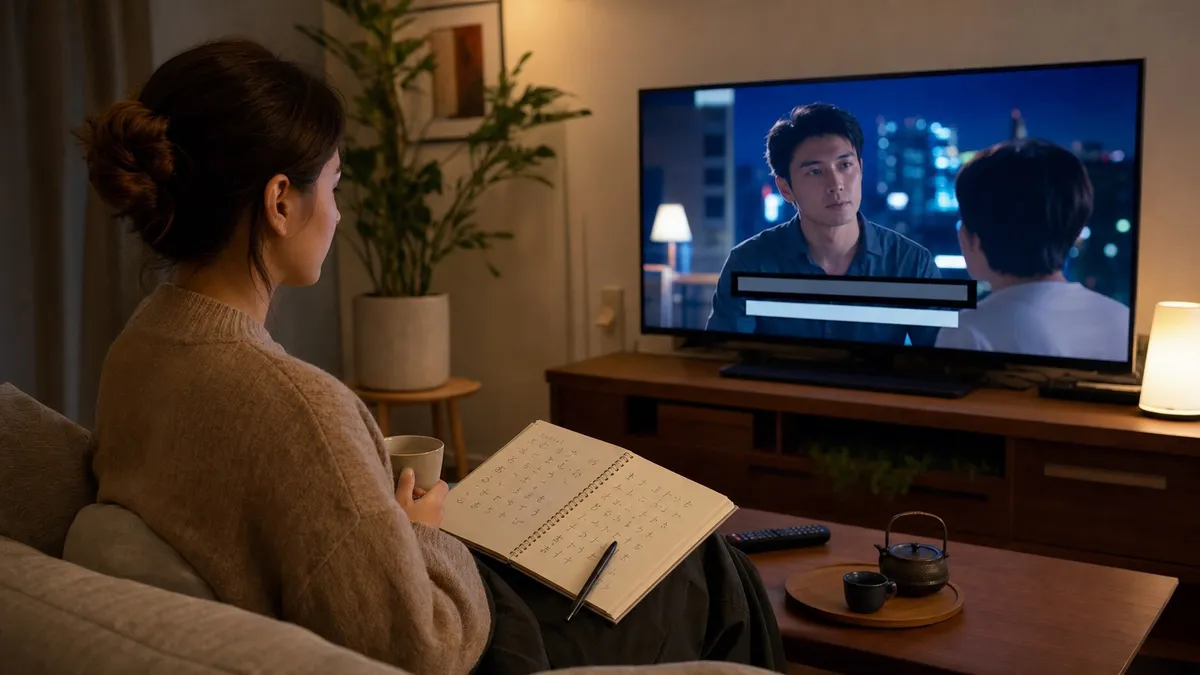
Japanese movies on Netflix US are best for focused study, not endless pausing. A movie gives you rich context, but it also gives you long scenes, fast shifts, and vocabulary you may never need. Treat the movie like a source of a few strong sentences.
If you want non-anime options, read Learn Japanese on Netflix Without Anime. For a US subtitle setup, use Netflix Japanese Subtitles in the US. For repeatable listening, pair movies with Japanese Listening Practice on Netflix US.
Best Answer
Use Japanese movies when you can study a complete scene. Watch normally first, then return to two minutes of dialogue. Save lines that are clear, emotionally memorable, and reusable outside the movie.
| Movie study mistake | Better move |
|---|---|
| Mining every unknown word | Save only useful full sentences |
| Pausing from minute one | Watch first, study second |
| Choosing complex period dialogue | Start with modern settings |
| Making huge decks | Keep five to eight cards |
Why Movies Work Well With Cards
Movies create memory hooks because you remember the scene. KIKUGO turns that moment into an explained line and a saved card, so the context survives after the movie ends. Use Netflix Japanese Flashcards when you want review without manual transcription.
For the full setup, start from Learn Japanese with Netflix.
Ready to turn one scene into real review? Install KIKUGO and save a few high-value lines.
FAQ
Are Japanese movies on Netflix US harder than shows? Often yes. Movies can have denser plots, fewer repeated phrases, and more stylized dialogue, so they work best as focused scene study.
How much of a movie should I mine? Mine one or two scenes, not the whole movie. A small set of useful lines is better than a huge deck of low-context cards.
Should I watch the movie first without pausing? Yes. Watch for the story first, then choose a short scene for Japanese subtitles, replay, explanations, and saved cards.