
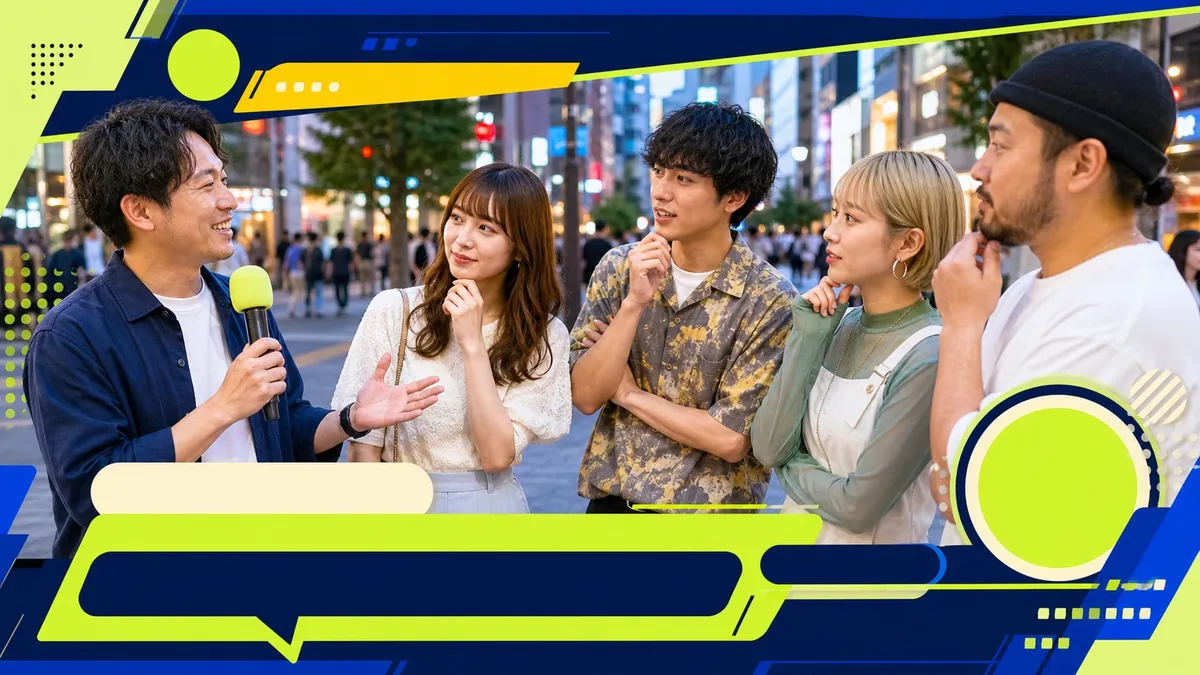
To learn casual Japanese with YouTube, study the relationship around a phrase as carefully as the phrase itself. Vlogs, street interviews, talk shows, cooking channels, and hobby videos reveal reactions and contractions that textbooks may simplify. They also feature personas, editing, regional speech, and audience-facing performance. Watch widely, compare contexts, and verify before you imitate.
A focused routine can improve recognition and make conversations feel less mechanically translated. It cannot replace a speaking partner or guarantee a relationship. Casual language works because people share context, trust, and expectations—not because someone memorized a list of slang.
Choose contexts, not “authenticity”
All language in a real video is authentic to that event, but it may not be transferable to yours. A creator addressing followers, two old friends teasing each other, and a customer speaking to staff all use Japanese for different social jobs.
Build a three-video set around one ordinary activity:
- a solo vlog describing the activity;
- an interview where two strangers discuss it;
- a group video where friends react to it.
The comparison reveals which phrases remain stable and which depend on relationship or performance. Choose clear audio, visible context, and Japanese captions reviewed by the channel when possible. The focused YouTube workflow explains how to avoid spending the session inside recommendations.
Avoid channels selected only because the host speaks extremely fast. Difficulty is not proof of usefulness. A calm cooking video can teach turn-taking, soft reactions, and everyday verbs more efficiently than a chaotic challenge video.
Notice what casual speech changes
On a short segment, mark only a few phenomena:
- particles that are omitted;
- contracted endings;
- sentence fragments whose meaning comes from context;
- fillers that hold a turn;
- reactions that show attention;
- shifts between plain and polite speech.
Do not reduce each feature to “casual equals drop particles.” Ask what remains understandable and why. Facial expression, shared objects, previous sentences, and relationship all carry information.
Automatic captions are not a perfect transcript. YouTube warns that automatic captions may be inaccurate when speech, accents, noise, or overlapping voices challenge recognition. If a casual form looks surprising, replay it and consult another source before saving it.
Use the Japanese listening without translation guide to connect recurring reactions directly to their conversational function.
Store the social conditions with the sentence
A useful note answers five questions:
- What was said?
- What did it mean here?
- Who said it?
- To whom?
- Would I use it, recognize it, or avoid producing it for now?
That final label prevents recognition vocabulary from becoming reckless output. You can understand rough or highly stylized speech without adopting it.
The Japan Foundation’s Irodori resources organize practical Japanese around real-life situations. Use comparable examples to check how ordinary interactions are framed, especially when a creator’s speech seems strongly personal.
When making an Anki card, keep one register note rather than a biography of the speaker. For example: “friends, playful, recognition first.” The scene supplies memory; the note supplies caution.
Practice variation, not impersonation
After understanding one phrase, make two safer variants:
- one for a friend or familiar peer;
- one polite alternative for someone you do not know well.
Say them in a lesson or language exchange and ask what sounds natural for you. Listen to the correction without treating your partner as free labor. Agree on goals, share time fairly, and respect a refusal to explain. The language-exchange tips cover this reciprocal approach.
Do not imitate a creator’s voice, gendered persona, dialect, or catchphrase as a shortcut to belonging. Your goal is flexible comprehension and appropriate choices. Humor, closeness, and informality develop through mutual interaction.
Reserve KIKUGO’s upcoming video support
KIKUGO currently works with Japanese Netflix subtitles. YouTube and Crunchyroll support is coming, but it is not live and no precise date is promised. Planned YouTube support will make it easier to explain and preserve selected lines; it will not judge every social nuance or replace feedback from people.
Sign up before the first public YouTube or Crunchyroll release to reserve 50% off your first annual year. The exact annual price will be communicated before you buy. Activation remains open for 30 days after the launch email, and renewal uses the normal annual price in effect then.
This fall, select three creators from different contexts and study one minute from each. Keep the phrases that recur across relationships. Those are stronger foundations for real listening than the flashiest isolated slang.
Create a weekly comparison table with four columns: phrase, relationship, conversational job, and safer alternative. A reaction that appears across a family vlog, an interview, and a hobby discussion is a stronger recognition target than a one-off catchphrase. Still, frequency does not remove register. Ask a teacher which version fits a learner speaking with a peer, a host family member, or a new colleague.
Revisit the same creators after two weeks. Familiar voices reduce the decoding burden, letting you notice timing and interpersonal choices you missed initially. If recommendations keep pulling you away, open the saved playlist directly and stop after the planned segment. Focus is part of the language method.
Consistency makes subtle differences audible.
FAQ
Can YouTube teach casual Japanese?
It provides rich examples, but you must compare relationships and verify what is appropriate to produce.
What videos should I choose?
Use clear vlogs, interviews, cooking, hobbies, or talk formats with visible context and reliable captions.
Should I copy a creator exactly?
No. Learn the function, then develop language appropriate to your own identity and relationships.