
Anime sentence mining is simple on paper: watch, catch a line you almost understand, turn it into a card, review it. The hard part is keeping it up past week three. This guide is the routine I use today, the mistakes that made me quit once, and the shows I actually mined at each JLPT level.
Quick context: I started mining anime lines at N4 and kept going through N1. You do not need my level to use this. You need a show you can mostly follow and a cap on how many lines you keep.
Why anime sentence mining beats vocabulary lists
A vocabulary list gives you a word with no situation around it. A mined line gives you the word inside a sentence a character actually said, with a voice, a mood, and a reason. When the card comes back a week later, you do not only remember 諦める means “give up”. You remember who said it, how, and what happened next. That memory is a better hook than any mnemonic.
It also teaches what lists skip: particles, verb endings, sentence-final tone, and the casual shortcuts real people use. Most advice on sentence mining Japanese from anime stops at “use context”. The useful question is what to mine, how much, and how to keep the reviews under control. If you want the theory first, read What Is Sentence Mining? or the full Japanese sentence mining guide. The rest of this page is the workflow.
The complete workflow, step by step
Here are the numbers I use, and they stay the same everywhere on this page: 3 to 4 episodes a week, 3 to 5 lines per episode, about 15 cards a week, and 10 to 15 minutes of review a day.
Step 1: Pick an anime at your level
A good mining show has three things: plenty of dialogue, a speed you can follow with Japanese subtitles, and vocabulary that comes back episode after episode. Everyday settings like school, cafes, family life, and team sports repeat their words. Fantasy battles and space operas invent theirs.
Test a show with one episode. If you understand roughly the gist of most scenes with Japanese subtitles on, it is in range. If you pause every line, it is too hard for now, not forever. The level-by-level list further down names the shows I used and why they worked. For a wider list, see Best Anime to Learn Japanese.
Step 2: Spot the lines worth mining
The rule is one gap per line, often called i+1: you understand everything except one word, one ending, or one grammar pattern. Lines with three unknowns are slow to review and easy to fail. Lines you understood instantly do not need a card. The i+1 sentence mining guide goes deeper on this.
I add one filter that changed everything for me: I only mine what keeps following me. That means an expression I heard twice in the same episode, a sentence I could imagine saying myself, or a grammar pattern I half recognize. Everything else goes by. That is how I end up with 3 to 5 lines per episode, never 20.
While watching, I do not stop for every candidate. I note the timestamp or click the line, finish the scene, and decide afterward. In a 45-minute episode, that usually means 6 to 8 candidates by the end credits. I then keep the 3 to 5 that pass the filter and drop the rest without guilt. If a dropped line really matters, the show will bring it back, and I will catch it then.
Step 3: Capture the line and build the card
A good card keeps the full Japanese sentence on the front. On the back: the reading, a natural translation, the one word or pattern you mined, and a short grammar note. Add a context field with the show, the episode, and who is talking to whom, because register depends on it. Here are three famous lines in that format. Netflix subtitles can write them slightly differently (kanji or kana), so always mine the version on your screen.
- 大丈夫、僕最強だから。 (daijōbu, boku saikyō dakara) “Don’t worry, I’m the strongest.” Jujutsu Kaisen, episode 2, Satoru Gojo. Gap: a sentence ending on だから, which gives the reason and leaves the conclusion unsaid. Context: a teacher reassuring a worried student, casual and cocky.
- おれが居ればお前は最強だ! (ore ga ireba omae wa saikyō da) “As long as I’m here, you’re the strongest!” Haikyuu!!, Shoyo Hinata to Tobio Kageyama during the Aoba Johsai match. Gap: the 〜ば conditional. Context: teammates, rough casual speech with おれ and お前.
- アーニャ、ピーナッツがすき。 (Anya, pīnattsu ga suki) “Anya likes peanuts.” Spy x Family, Anya. Gap: すき with が for the thing you like. Context: a small child using her own name instead of “I”, which adults do not do.
Scene audio helps you remember intonation, so keep it if your setup allows it. If not, the episode and timestamp in the context field let you rewatch the scene later. For card design details, see How to Make Japanese Anki Sentence Cards.
Step 4: Review without losing your evening
Review every day, ideally at the same time. I do mine in the morning, 10 to 15 minutes, before anything else. Daily matters more than long: 15 minutes every day beats an hour on Sunday, because spaced repetition only works when you show up.
Keep new cards around 15 a week. That keeps the daily load flat. If your due count climbs past what you can clear in 15 minutes, stop adding cards for a few days instead of skipping reviews. How many Anki cards a day covers the math.
Once a week, I rewatch one scene without subtitles. It is the most honest test I know: either the lines I mined land by ear, or they do not yet.
Where KIKUGO removes the friction
I timed my manual workflow honestly. One card took me 2 to 3 minutes:
- Pause and copy the subtitle: about 20 seconds.
- Look up the unknown words in a dictionary: 45 to 60 seconds.
- Check the grammar, usually with 2 or 3 tabs open: about 45 seconds.
- Clean up the text, format the card, add audio if I bother: 40 to 60 seconds.
At 15 cards a week, that is 30 to 45 minutes of pure mechanics every week. That invisible cost is what killed my consistency, not the difficulty of Japanese.
With KIKUGO on Netflix, one click on the Japanese subtitle replaces those steps. The explanation shows up next to the scene: translation, reading, a word-by-word breakdown, and a grammar note. The subtitle explanation feature shows what each part looks like. If the line is worth keeping, I press Save card. The decision takes me about 10 seconds, and that decision is now the only real work.
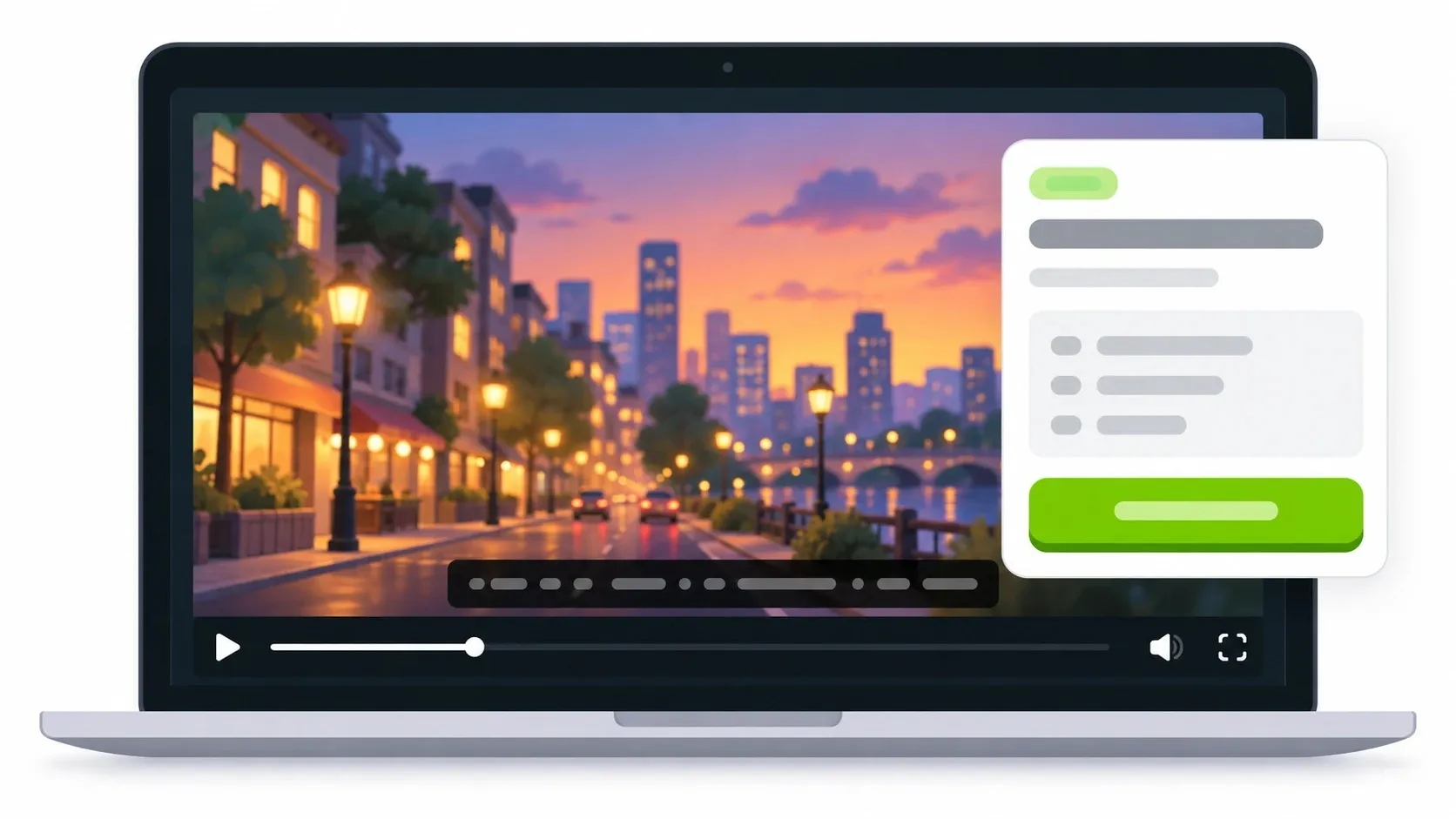
Illustration of the flow, not a product screenshot.
Here is what that means for a typical evening of two episodes, using my own numbers:
| Two-episode evening | Manual workflow | With KIKUGO |
|---|---|---|
| Lines kept | 6 to 10 | 6 to 10 |
| Time per card | 2 to 3 minutes | About 10 seconds to decide |
| Card-making time | 12 to 30 minutes | Under 2 minutes of decisions |
| Tabs open | Dictionary, grammar site, Anki | Netflix only |
The number of lines stays the same on purpose. What changes is the time between noticing a line and getting back into the story.
What it changes in practice: the ceiling is my own selection, not production time. I still stop at 5 lines an episode, because reviews, not card-making, are what broke me the first time. The 30 to 45 minutes a week I used to spend formatting cards go back to watching.
Saved lines land on the KIKUGO dashboard, where you can go over them with their reading, translation, key vocabulary, and grammar note, then search or filter by JLPT level. If you use Anki for spaced repetition, export them as an .apkg deck or a CSV file. Two honest limits: KIKUGO needs Japanese subtitles to be available on the title, and its cards do not include scene audio, so the timestamp trick from Step 3 still applies.
Illustration of the dashboard, not a product screenshot.
Which anime to choose for your JLPT level
These are the shows I actually mined, with my level at the time. Netflix availability changes by country and over time, so check the title page for Japanese audio and Japanese subtitles before you commit to a series.
N5 to N4: anime with simple dialogue
I did not mine anything below N4, so this tier only has the two shows I used.
- Shirokuma Cafe (N4 for me). Short lines, everyday situations, and the same cafe small talk every episode. The polar bear owner loves puns, so skip the wordplay lines and mine the ordering, greeting, and complaining.
- Barakamon (N4 to N3). Calm pacing and natural conversations. One warning: most villagers speak the Goto Islands dialect, so mine the protagonist’s standard Japanese and enjoy the rest by ear.
If you are below N4, the N5 and N4 Netflix show guide is a better starting point than either.
N3: the sweet spot for mining
N3 is where mining pays the most: you follow most of a scene, and every episode still has a few lines with one clear gap.
- Haikyuu!! Team dialogue repeats constantly: encouragement, instructions, rivalry. Volleyball terms come back so often they stop being jargon.
- March Comes in Like a Lion. It alternates inner monologue and conversation, both in everyday vocabulary. Skip the shogi terms and mine the feelings.
- Spy x Family. One episode mixes a child’s speech, polite adult speech, and casual friends, which is great for noticing register.
- Jujutsu Kaisen. Modern casual Japanese, sarcasm, and expressions you will hear elsewhere. Skip the cursed-technique explanations; they are jargon.
N2 and beyond: harder anime, then dramas
- Bakemonogatari. Fast, dense dialogue built on wordplay. I tried it at N3 and could only handle it on good days. Save it for later.
- Hanzawa Naoki. A banking drama, not an anime, but the best keigo training by ear I found. I started it between N3 and N2.
- Dokushin Kizoku. A 2013 Japanese romantic comedy drama about adult single life. Natural adult Japanese, not dramatized, which I mined at N2.
- Japanese documentaries and variety shows. Unscripted speech, overlapping voices, real hesitation. At N2, this is where anime language meets how people actually talk.
Leaving anime is normal at this stage. The Japanese anime learning guide explains how to balance the two.
Anime to avoid early (and why)
- Gintama. Rapid parody, puns, and pop-culture references. Fun, but most lines have three gaps or more.
- Dr. Stone. Long science explanations full of technical vocabulary you will rarely reuse.
- Heavy dialect shows before N2, unless you only mine the standard speakers.
- Pure action shows where a whole episode has a few lines of dialogue. You cannot mine what nobody says.
Classic anime sentence mining mistakes
Mining too many cards. When I started, I mined 15 to 20 cards per episode because every line felt important. I lasted three weeks. My due pile passed 300 cards, reviews took 40 minutes a day, and watching felt like homework. Cap it at 3 to 5 lines and let the rest go.
Mining lines with three or more unknowns. You will fail them for weeks and start to hate the deck. One gap per line.
Translating word by word. A literal translation of 大丈夫、僕最強だから comes out as “Okay, I strongest because” and teaches you nothing about tone. Write a natural translation and note who is speaking to whom.
Quitting after a bad stretch. After the 300-card pile, I cut to 5 cards per episode, then stopped mining entirely for two months. Coming back with the strict filter worked. If you fall behind, pause new cards, clear the backlog, and restart smaller. The immersion without burnout guide covers the warning signs.
Picking a show for your ego. A show that is too hard gives you lines full of gaps, slow reviews, and no fun. Pick the show you can follow, not the one you want to be able to follow.
FAQ
Does sentence mining actually work?
Yes, if you keep it small and regular. A line you heard in a scene comes with tone, context, and a voice, so it is easier to recall than a word from a list. What breaks most learners is not the method but the volume: mine 3 to 5 lines per episode, review every day, and judge results over months, not weeks.
How much time a day does anime sentence mining take?
Plan 10 to 15 minutes of review a day, plus the time you already spend watching. Mining itself should add very little to an episode if you cap it at 3 to 5 lines. Making cards by hand costs 2 to 3 minutes per card, so a tool that removes that step matters more than any study hack.
Do you need Anki for sentence mining?
No. Anki adds spaced repetition, which helps once your deck grows, but you can start by saving lines and going over them. KIKUGO keeps every saved line on your dashboard with its reading, translation, vocabulary, and grammar note, and exports to Anki as .apkg or CSV when you want scheduled reviews.
Can you do sentence mining without Netflix?
Yes. Any Japanese source with subtitles or a transcript works, including Blu-rays, other streaming services, and YouTube. The method stays the same: pick lines with one gap, keep the full sentence, review daily. The difference is friction. Without a tool, you copy, look up, and format every card yourself. KIKUGO currently works on Netflix.
Start tonight
- Pick one show you can mostly follow with Japanese subtitles.
- Keep 3 to 5 lines per episode: one gap each, things that keep coming back.
- Review 10 to 15 minutes every morning, and rewatch one scene a week without subtitles.
Install KIKUGO, open an anime on Netflix with Japanese subtitles, and save your first three lines with one click each. Then come back tomorrow, and the day after. Regular beats perfect.