

-

How Much Japanese Should You Study a Day?
Choose a realistic daily Japanese study time with minimum, normal, and stretch routines for listening, review, and sustainable progress.
-

How to Learn Japanese Efficiently
Learn Japanese efficiently by removing study friction while protecting listening, retrieval, speaking, feedback, and meaningful Netflix input.
-

Japanese Language Exchange Tips for Real Conversation
Use these Japanese language exchange tips to prepare useful topics, share time fairly, request corrections, and turn input into real conversation.
-

Japanese Small Talk for Real Conversations
Build Japanese small talk with safe topics, natural follow-up questions, listening reactions, repair strategies, and respectful conversation practice.
-

Japanese Speaking Anxiety: Keep Talking
Handle Japanese speaking anxiety with preparation, repair phrases, smaller conversation goals, and practice that keeps communication moving.
-

Japanese Study Schedule for Busy Adults
Build a Japanese study schedule for busy adults with realistic 15, 30, and 60-minute Netflix, listening, speaking, and Anki routines.
-

JLPT vs Business Japanese for Work in Japan
Compare JLPT vs business Japanese for hiring, meetings, email, speaking, reading, and a study plan that builds certification and real performance.
-

Japanese Conversation Practice for Real Life
Build Japanese conversation practice around listening, repair phrases, shadowing, and real exchanges so textbook knowledge becomes natural human connection.
-

Learn Japanese for Work in Japan: A Practical Plan
Learn Japanese for work with a practical plan for meetings, listening, keigo, reading, and job research—without confusing Netflix study with career prep.
-

How to Stay Motivated Learning Japanese (Without Burnout)
Learn how to stay motivated learning Japanese with a low-friction routine that turns Netflix, useful sentences, and Anki into progress without burnout.
-

Language Reactor to Anki for Japanese: What Works
See how Language Reactor Anki export fits Japanese Netflix study, what its cards include, and when full-sentence explanations work better.
-
Migaku vs Language Reactor for Japanese (2026)
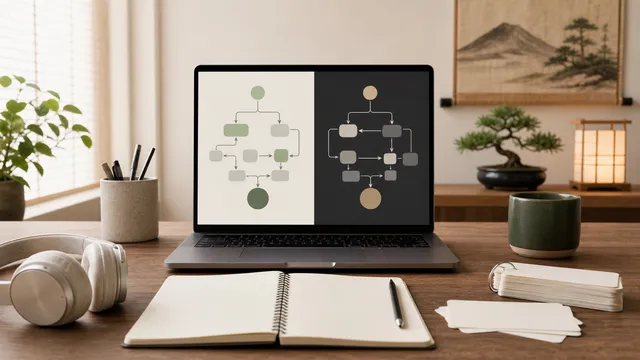
Compare Migaku vs Language Reactor for Japanese Netflix, Anki export, dual subtitles, sentence mining, setup, and full-sentence explanations.
-

Migaku and Anki for Japanese Netflix: Which Workflow?
Compare Migaku and Anki for Japanese Netflix with KIKUGO's subtitle explanations, saved cards, setup, and learner-owned export workflow.
-

Baka Meaning in Japanese: Insult, Joke, or Subtitle Trap?
Learn baka meaning in Japanese, when it sounds insulting or playful, and how subtitle context changes the translation in real scenes.
-

Daijoubu Meaning: Okay, Safe, or No Thanks?
Learn daijoubu meaning in Japanese, why it can mean okay, safe, fine, or no thanks, and how subtitles reveal the nuance.
-

Nani Meaning in Japanese: What, Huh, or Why?
Learn nani meaning in Japanese, why 何 can read as nani or nan, and how subtitles turn it into what, huh, or why in real scenes.
-
Japanese Alphabet: Hiragana, Katakana, and Kanji
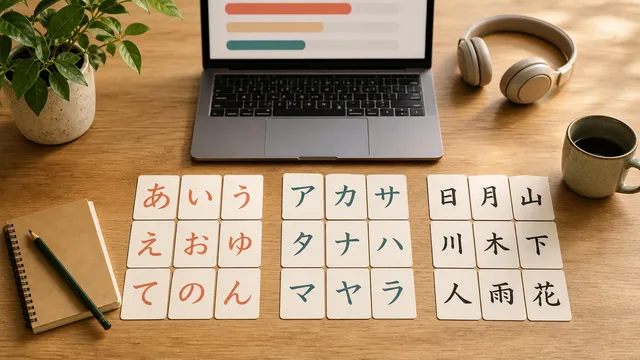
Understand the Japanese alphabet, how hiragana, katakana, and kanji share one sentence, and what to learn before reading Japanese subtitles.
-
Katakana Practice for Japanese Subtitles
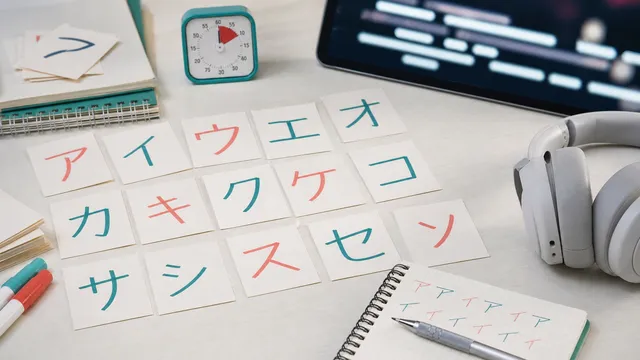
Build katakana practice with loanwords, confusing pairs, long vowels, and timed drills that prepare you to read Japanese subtitles faster.
-

Learn Kanji From Japanese Subtitles
Learn kanji from Japanese subtitles with a context-first routine for meaning, readings, recurring words, sentence cards, and long-term review.
-

Japanese Sentence Structure in Netflix Subtitles
Understand Japanese sentence structure through Netflix subtitles: predicates, SOV order, particles, omitted subjects, flexible word order, and tone.
-

Japanese Te Form in Netflix Subtitles
Learn the Japanese te form through Netflix subtitles: conjugation rules, connected actions, requests, ongoing states, permission, and casual contractions.
-

Japanese Verb Conjugation in Netflix Subtitles
Learn Japanese verb conjugation through Netflix subtitles, including godan, ichidan, irregular, plain, polite, negative, past, and te forms.
-

N4 Grammar List for Netflix Subtitles
Use this practical N4 grammar list to recognize intentions, reasons, experience, conditions, connected actions, casual forms, and nuance in Netflix subtitles.
-

N5 Grammar List for Netflix Subtitles
Use this practical N5 grammar list to recognize beginner particles, verb forms, adjectives, requests, permission, and everyday patterns in Netflix subtitles.